
Springtime on a volcano
A second visit to Madeira's capital Funchal is full of surprises

Exploring this island by car is not for the faint of heart. Sabrina has a fear of heights, so driving up (or worse yet down) the vertiginous upper slopes of a massive, mostly submerged volcano, or in and out of its myriad craters on roads with dizzy-making forty plus degrees of steepness like we did on our first visit here, was not an experience we had any intention of repeating. After all, this eden is no place to be explored with your eyes tightly shut, especially in springtime.
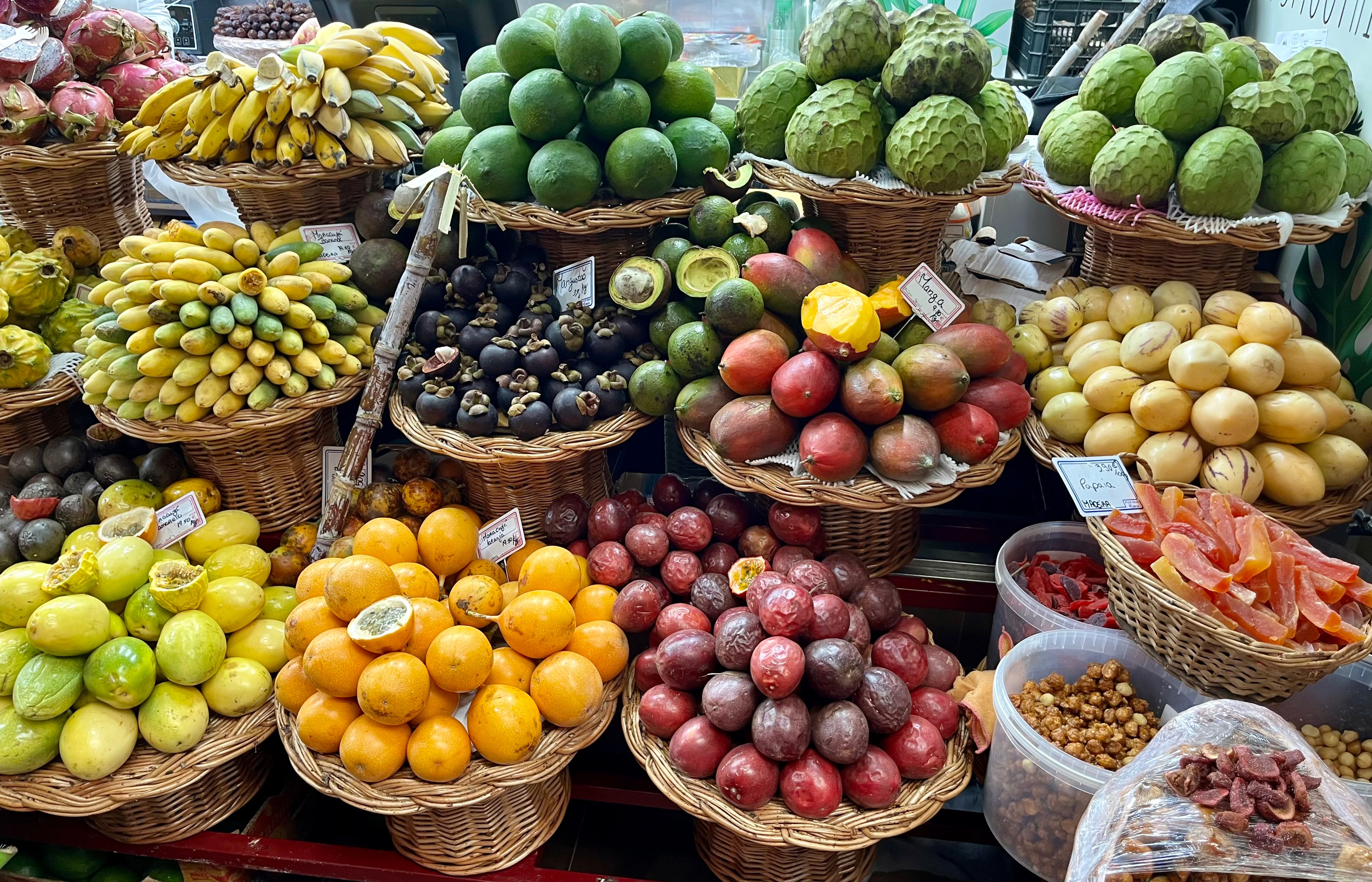
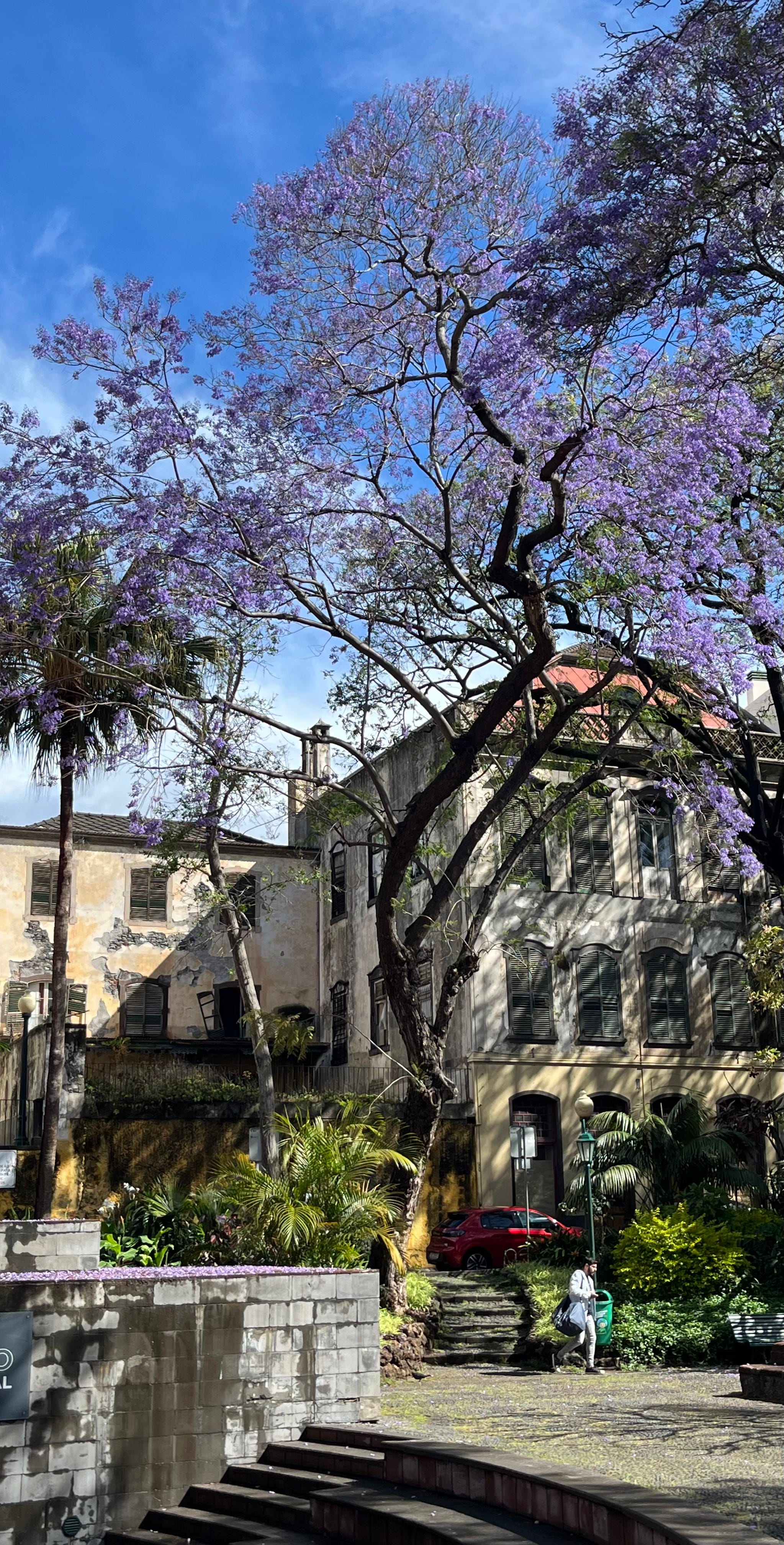
Funchal is in full bloom as African Tulip, Frangipani and Jacaranda tree blossoms festoon the pavements and perfume the air with their scarlet, yellow and violet droppings as the city gears up for its annual Flower Festival. Likewise, at the Art Deco Mercado dos Lavradores, it’s peak season for the panoply of exotic fruits that grow in the rich lava soil of this remarkably fecund sub-tropical island. At just one stall we count five types of bananas, three types of passion fruit, mangosteens, two types of dragon fruit, custard apples, prickly pears and tiny mangoes so sweet and tender that you can even eat the skins. It’s an exotic array we have not seen outside of Hawaii or Southeast Asia.
Few places in our experience change for the better, but in the decade since we last visited Funchal feels like it’s been injected with a surge of energy, youth and modernity (and dare I say it, homegrown pride). The city in 2025 no longer trades on the faded, genteel glories epitomised by the blazer wearing, outstretched-pinkie-fingered Anglo pomposity of Reid’s Palace Hotel, although that fusty establishment still looks down its aquiline nose on the party below from its bougainvillea-bedecked hilltop. Excitingly, the Ritz Café, that other former bastion of English Home Counties snobbery is now Irish run, so has discovered the Craic.
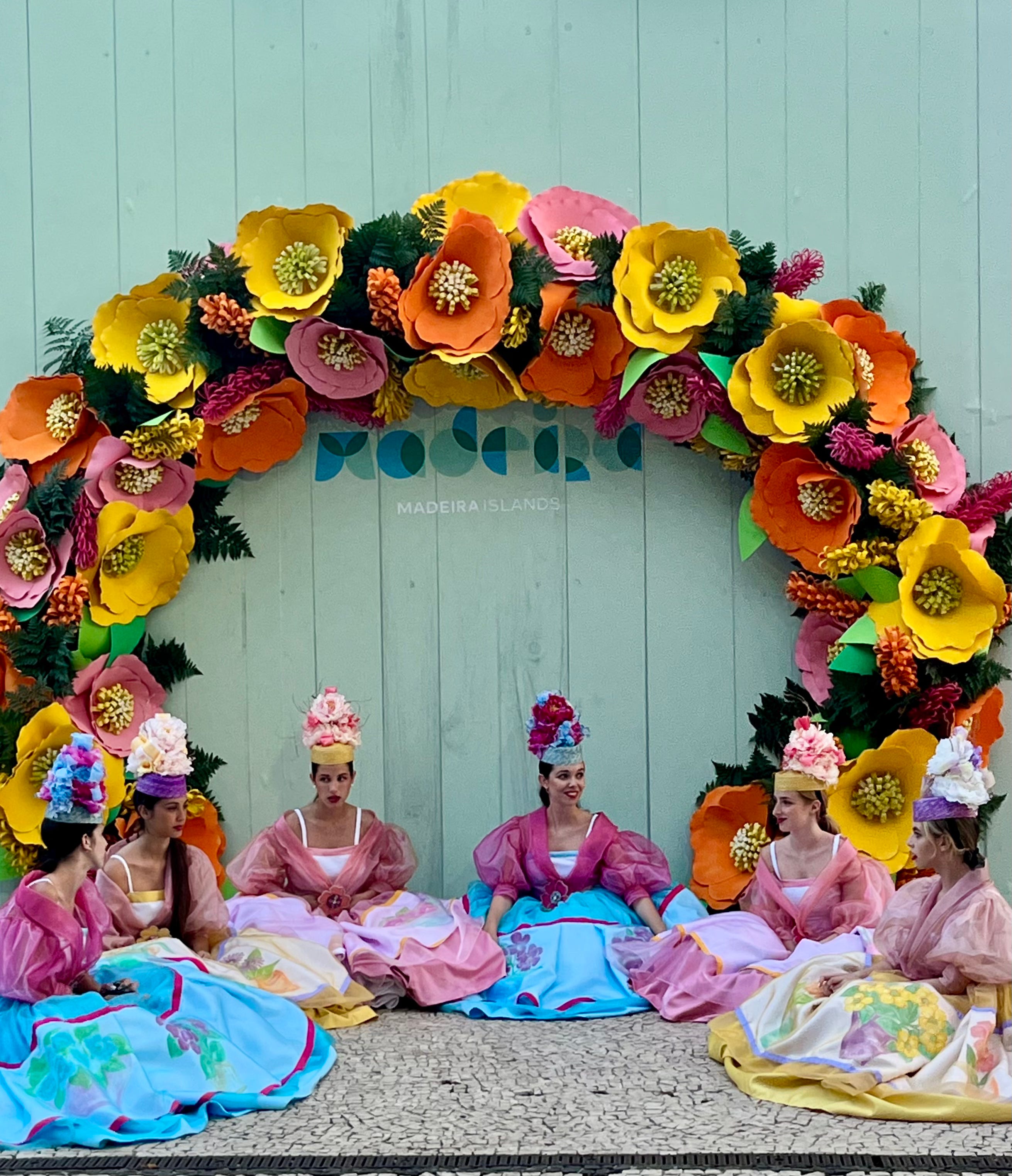
The Ritz’s deep first floor verandah bar turns out to be an excellent vantage point from which to take in the carnival atmosphere of flower filled festival pavilions. Scents waft intoxicatingly upwards from the freshly stitched carpets of blooms which adorn the pavements of Avenida Arriaga and the festival’s flower girls pose like a bunch of bored floral Carmen Mirandas for photos.
The real party however is down on the seafront esplanade, where the city’s bus station has been commandeered as a rallying point for the floats and dancers taking part in this afternoon’s parade and flower girls of all ages are waiting excitedly for their show to begin.


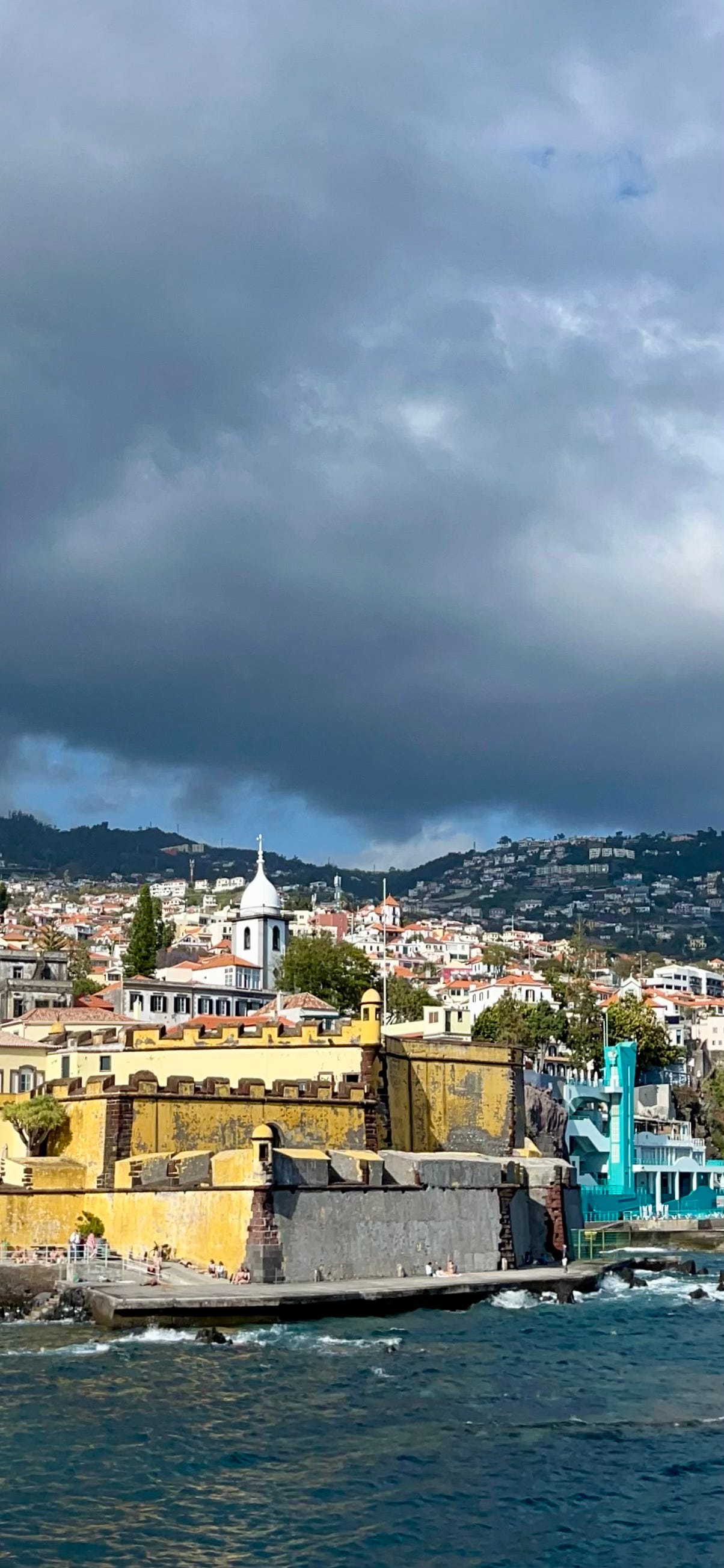
Predictably every seat on the parade route was booked up weeks ago, so we escape the crush and find that Rua de Santa Maria which runs from Mercado dos Lavradores to the imposing oceanfront Fortress of São Tiago in the city’s oldest, most tourist dense neighbourhood and dates back to its first settlement in the 1420s, is correspondingly deserted. So for the first time ever, with its restaurants and fado bars mostly shuttered we are able to properly appreciate the neighbourhood art project that depicts the community’s folklore and its wicked sense of humour on its two hundred plus doorways. The few other flower parade refuseniks that we do find are propping up the ramshackle waterfront bar by the picturesquely dilapidated old 17th century fortress, or eating lunch in the adjacent turquoise painted Art Deco Bathing Club, which has hands down the most scenic views in the city. Joining them, we drink a couple of glasses of Albariňo and enjoy a simple medley of grilled tuna, rockfish and red snapper.


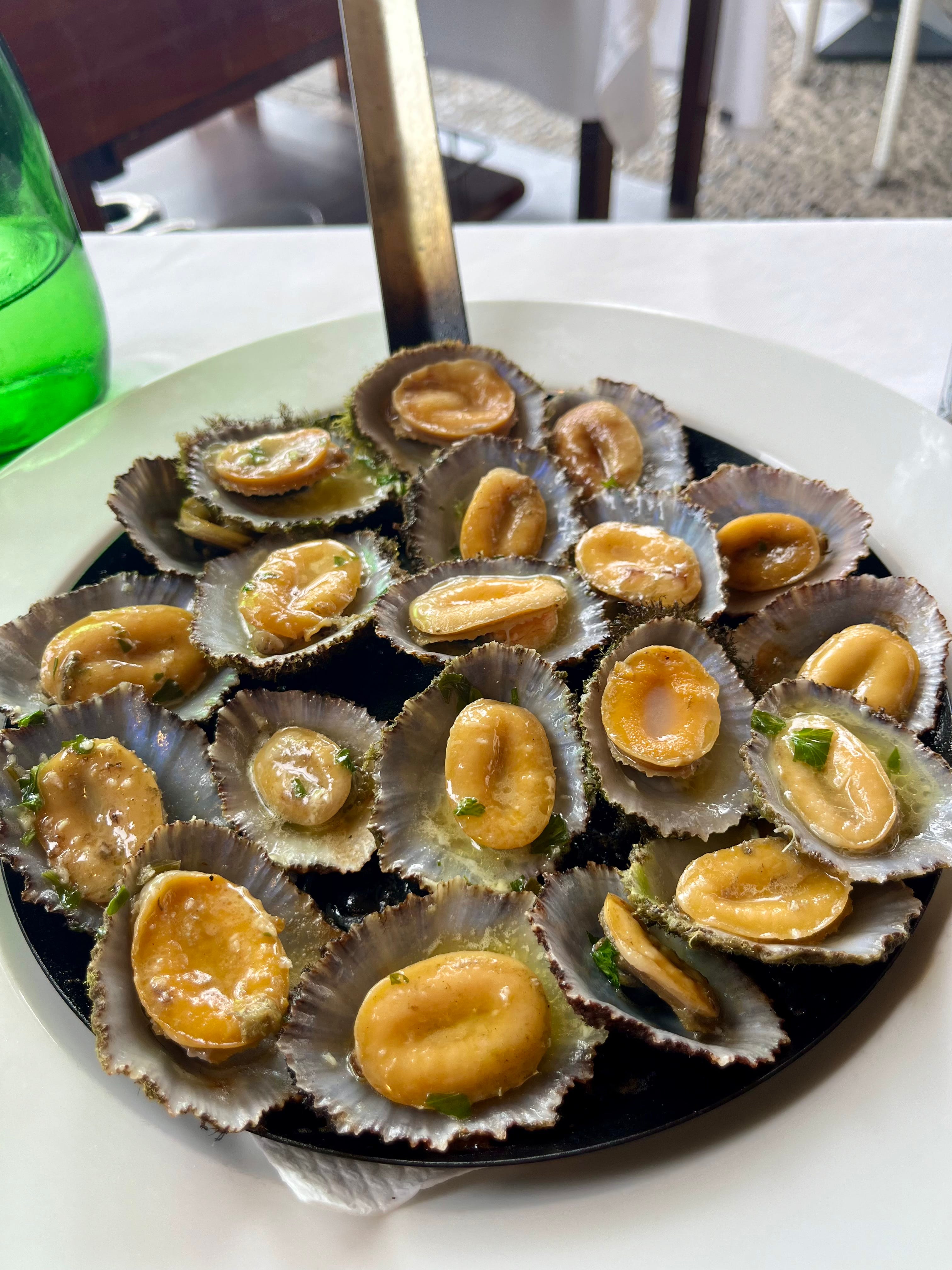
The food here is far more predictable than the weather, which cycles haphazardly between sunshine, storm clouds which oftentimes come to nothing and sudden torrential tropical downpours. So we have sought out favourite dishes we enjoyed when we were last here- Espetada (charcoal grilled cubes of beef on sticks, marinated in garlic with bay leaves), Lapas (limpets served grilled in their shells with garlic and lemon) and Cataplana (a fish and seafood stew cooked and served in a metal clam shaped container), all of which are wonderful.
However, as so often happens to us it was a restaurant we hadn’t even planned to visit which served up the dish of the trip. We were exploring the little port town of Câmara de Lobos a few miles west of Funchal, armed with newly bought umbrellas having been soaked to the skin the previous day, when high winds and squalls of horizontal rain suddenly appeared out of nowhere and our newly acquired rain gear fell apart on their first test. The words of the store owner “would you like cheap ones” were ringing in our ears as we took shelter in ‘Deserta Pequena’, which seemed like an ironic name under the circumstances. We were an awful long way from Lombardy, but they served the best, most comforting Osso Buco we have ever eaten.
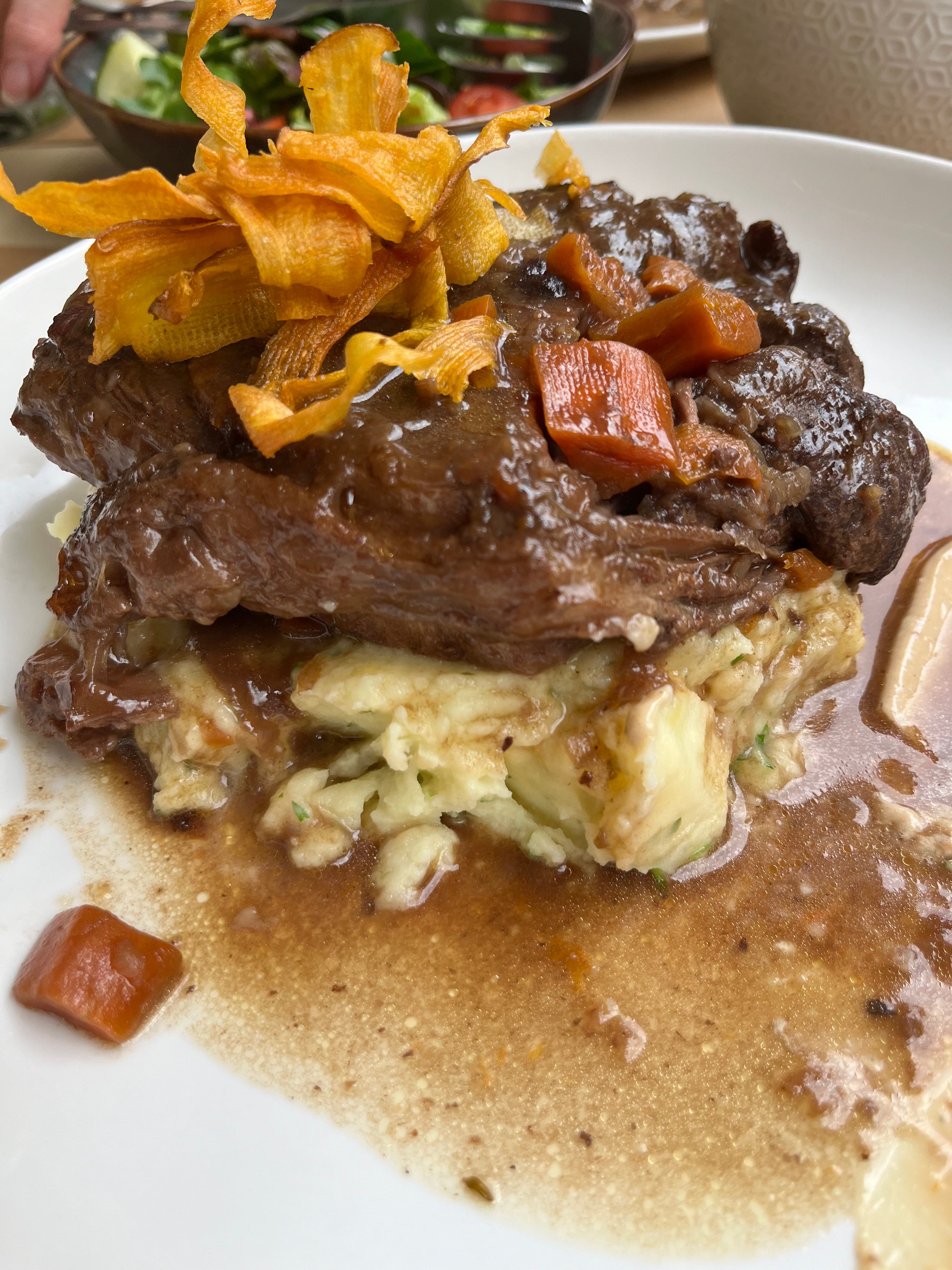
Osso Buco: Serves Six
6 thick cut veal shin bones, complete with marrow. Ask your butcher for hind quarter shin bones (about 4cm thick), as they’re meatier and more tender than the front ones
10g packet dried porcini
50g unsalted butter
3 tbsp olive oil
Small handful of gluten free or wheat plain flour seasoned
1 medium onion, diced
1 large carrot, diced
1 large celery stick, trimmed and diced
250ml beef stock
200ml dry white wine
225ml tomato passata
Potatoes for ‘smashing’
Soak the porcini for at least 15 minutes in 200ml/7fl oz boiling water. Don't remove the membrane that holds the veal together, but trim off any obviously fatty or lumpy bits. Dust both sides of the meat with the seasoned flour.
Heat the butter and oil in a very large flameproof sauté pan or casserole over a medium-high heat. When the sizzling stops, put in the veal and fry the slices for 2-3 minutes on each side until golden brown. Transfer the meat to a plate.
Replace the pan over a low to medium heat and tip in the onion, carrot and celery. Gently fry for 5 minutes until the vegetables have slightly softened, then raise the heat and pour in the wine. Bubble the wine furiously for 2 minutes, then remove the pan from the heat.
Strain the softened porcini out of the soaking liquid, squeeze out the excess moisture and reserve the liquid. Chop the porcini roughly and add to the sauté pan, together with the soaking liquid. Add the passata and stock, stir.
Return the veal back into the pan in a single layer, cover and bring to the boil. Immediately reduce the heat and simmer very gently for 2 hours, turning the veal slices halfway, until the meat is very soft. The liquid should reduce to a thickish sauce, but if it’s still thin after 1¼ -1½ hours, half uncover the lid to allow evaporation.
Serve on a bed of ‘smashed’ potatoes.
I am in my element on this island as hiking is one of Madeira’s true glories and the variety of terrain on offer is staggering. In addition to spectacular cliff and mountainside trails, you can follow the paths of the vast network of levadas (the island’s ingenious watercourses), which have irrigated crops here since the 15th century. Fed by the frequent rainstorms which keep this island so preternaturally green, the levadas range from the epically steep, where the channels are fed by waterfalls, to the gentle mimosa, eucalyptus and agapanthus lined Levada dos Tournos, which even agoraphobic suffering Sabrina enjoys.
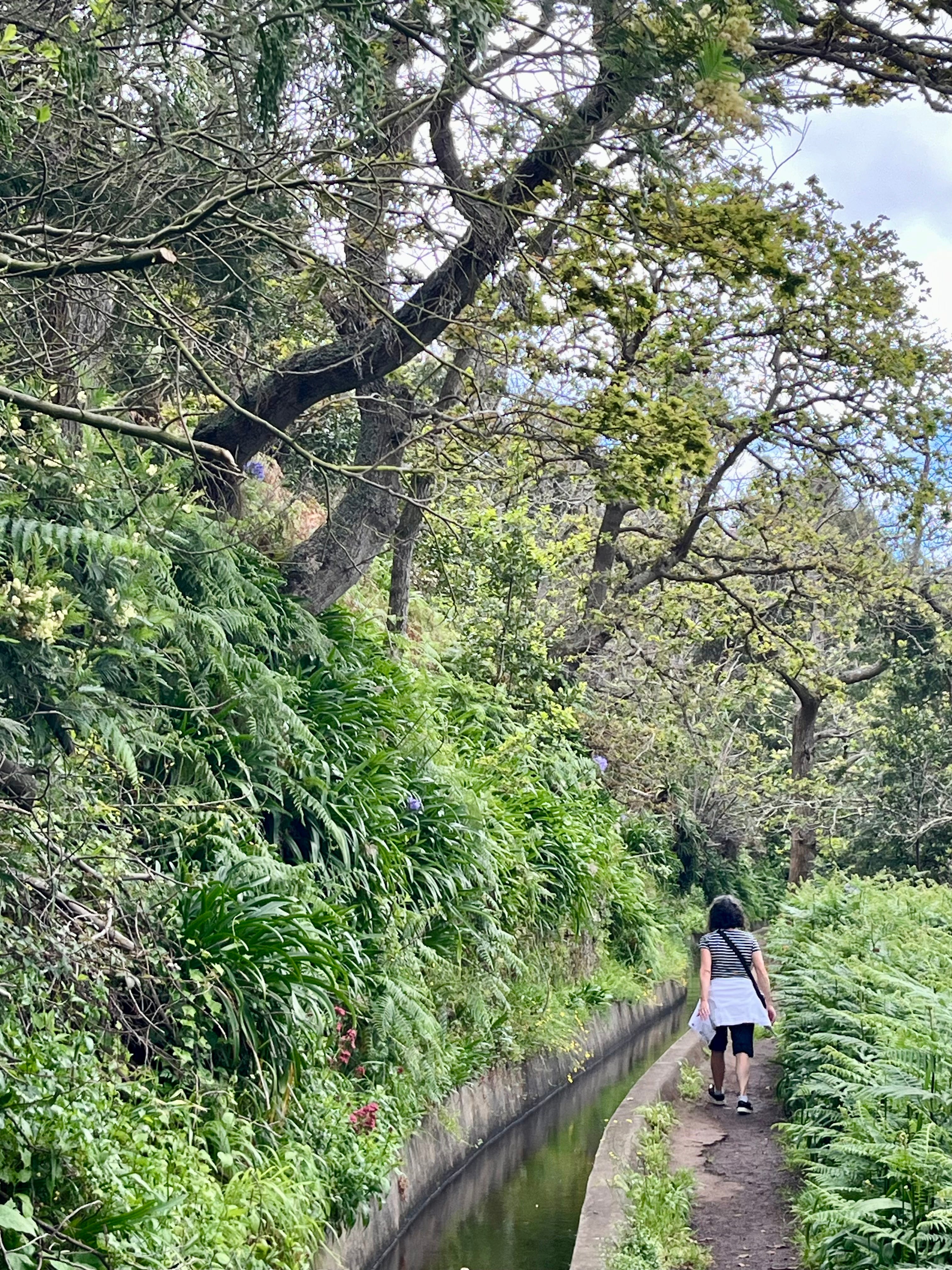
Resting up at the delightful Hortensia Tea House near trail’s end while trying to figure out how we were going to get back to the city, as the closest bus only runs a few times a day, we discover to our amazement that Uber can ride to our rescue on the side of a mountain.
In a final ironic twist, having avoided driving up or down precipitous slopes all week, our driver takes us back to town down Rua de Barreira, the island’s steepest road, with a gradient of 45 degrees.
We should have waited for the bus.
Appreciate the share @Portia
So much fun to read!! Felt like I was there.